
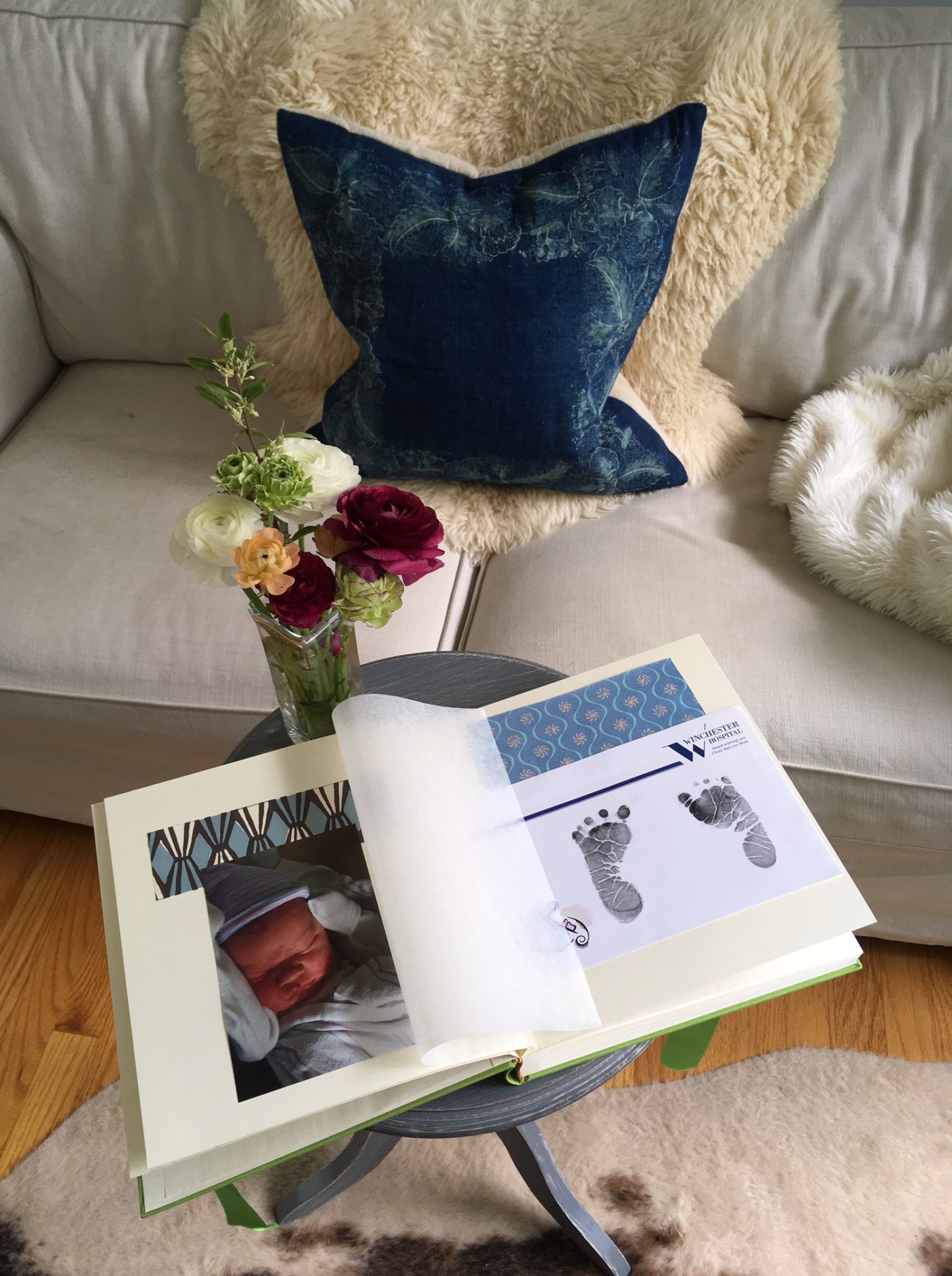
A few weeks ago, just before my son turned eight, I finally started putting together his baby book. I gathered photographs along with mementos, scored an old glue stick, and set off to make some progress. On my son’s birthday, he took the book from my hands and gasped, his eyes round and blue like ponds flashing images of an early morning sky. He crouched down, opened the book, and flipped through its pages.
I bought the book years ago, but after my son was born, I never found the time to put it together. Whenever he pulled it off the shelf where it leaned into the two I’d started for his older siblings, I wondered if he thought the empty volume were somehow a reflection of his net worth.
When I was young, my own mother printed and displayed photographs of our family on every wall in our house. These portraits presented the overall truth: that despite the divorces and other tragedies that had brought our large, blended family together, all was well. Still, I knew their glossy finish belied whatever was happening behind the scenes.
I found more comfort in flipping through the thick photo albums my mother stocked with hundreds of candid shots she’d taken over the years. Those were the pictures that represented who we all were, honestly.
When I had my own children, I didn’t hang formal photographs in my home. Were we not already there as animated, true versions of ourselves? Instead, I wanted to assemble a cartel of casual photo albums, as my mother had done. But when the age of digital cameras arrived, I took so many photographs of my family that I became overwhelmed. I printed a select few and left the rest to settle on my hard drive and, eventually, at the bottom of a storage box.
But this year, after weeks in isolation with my three children, I got bored. I pulled out that old computer again, fired it up, and called to my children.
We rooted around on screen for a minute, the four of us piled on the couch like piglets, until we found the photographs.
“Wow,” my fourteen-year-old daughter marveled, “You took so many pictures.”
We scrolled through and found a sweet series of my daughter at two years old.
It begins when she puts both feet through a single pant leg and tries to pull up her sweatpants. She screws up her face in frustration.
Poor thing, I thought as we flipped through.
Then, finally, she gets it right. She stretches the waist all the way up to her armpits. She pats her own tummy, congratulating herself on a job well done.
Oh, how we laughed.
Unlike his older siblings’ larks, my younger son’s life has been chronicled on my smart phone—a tacky roll of screen grabs from his bourgeoning selfhood. Maybe I really had begun to value these moments less than the ones I logged onto an actual camera.
Still, when it became clear that my son’s birthday would take place in quarantine, I knew at least one thing I could do for him.
Initially, the baby book project emerged as a small victory, a way of conquering time in the face of near anarchy regarding any other plans. But the book was an important gift this year. As my children sat down to compare their three baby books, like finding sets in a family Venn diagram, I could see that securing my children to their past was offering them a rare tether—a grounding sense of place.
From Washington, DC, my mother emails me articles about what is happening in the night sky, recipes meant to use up old pantry items, or activities for bored children. She sends these to me as though they are packages of sliced bread that are not sold in my corner of the world.
Look, she is saying, everything is still so grand!
But what my children and I need is to filter out some of the greater context that threatens to engulf us. This period is but a single snapshot that will accumulate in our history, a mere notch on the timeline of our greater selves.
Children are bound by their own youthful minds—babies don’t remember being born, and that is not really fair, is it? When my children hold their baby books, these tangible means of self-reflection, they feel a sense of ownership over a full, complete selfhood with an important past. This sanctifies their present and offers the promise of a future, in which the noisy world will be waiting for them. When they get there, with a greater understanding of who they are, that alone will be something grand.
*Note: This essay originally appeared on Motherwell Magazine’s Facebook page.
 samanthashanley.com
So, what do you think?